
Is Your CV Ready for Ireland’s 2026 Job Market?
If you’re planning to work in Ireland, your CV isn’t just a document. It’s your first impression, your handshake, your “hey, this is me.” And it can honestly make or break your chance of getting noticed. Ireland has its own unique approach to doing things. Recruiters there prefer transparent, honest, to the point CVs. No long stories. No fancy decorations. Just the correct details, in the right place, so they can see quickly if you’re the right fit.
Now, be honest with yourself for a second: is your CV actually ready for Ireland’s 2026 job market?
A lot of us look at our CV and think, “Yeah, it’s okay,” and then… silence. No replies. No interview calls. And that hurts. You start wondering, “What did I do wrong?” when sometimes, it’s not your experience, but simply how it’s written.
So the good news is? You don’t need a brand new career to fix it. With the proper Irish CV format, a cleaner layout, and a few Smart Tricks, your CV can suddenly feel clearer, stronger, and way more confident. Let’s learn together and get your CV ready for the opportunities ahead. Well, the thing is, once you notice how small changes make a big difference, you’ll feel like, “Okay, this actually works.
What Makes an Irish CV Special (Why It Matters)
Let’s keep it real CV that works in one place might flop in another. In Ireland, people refer to it as a CV instead of a resume. Irish CVs often provide more detail and can be up to two pages long, unlike the usual one-page resumes elsewhere.
Ireland has its own expectations for how a CV should look and read, and following those unwritten “local rules” can improve your chances of getting noticed.
For starters, Irish recruiters want clarity and simplicity above all else. They want your CV to be simple, straightforward, and easy to read. Think of it like this: when they pick up your CV, it should just click straightforward, nothing complicated. Use a clean layout, stick to the point, and skip anything extra. Recruiters flip through piles of CVs, and honestly, they don’t have time to decode long, boring pages. If it looks messy or drags on, it’ll disappear from their mind faster than a cold cup of coffee. Keep it neat and smart.
CV Structure:
How to Make Your CV Stand Out in Ireland
Let’s not make this more complicated than everyone says it is. It’s tough to make a CV. Writing a curriculum vitae for Ireland isn’t rocket science, but it does require some thought. If you have ever stared at a blank screen, unsure where to start, you’re definitely not the only one. Still, your CV is “your opportunity to get noticed’’ so why settle for something less? Don’t worry, here’s how to make your CV, step by step.
- Personal contact information
– Add your phone number. If you have an Irish number, use that. It just makes things easier for hiring managers and avoids any confusion. If you don’t have one yet, it’s worth getting an Irish number.
– Write down a professional email address (nothing silly, unprofessional, or outdated).
– Your address is optional. (If you’re applying for jobs in a specific area, mentioning that you live nearby shows you’re local and ready to start, which is always a plus).
- Links to socials, LinkedIn, etc., if professionally relevant
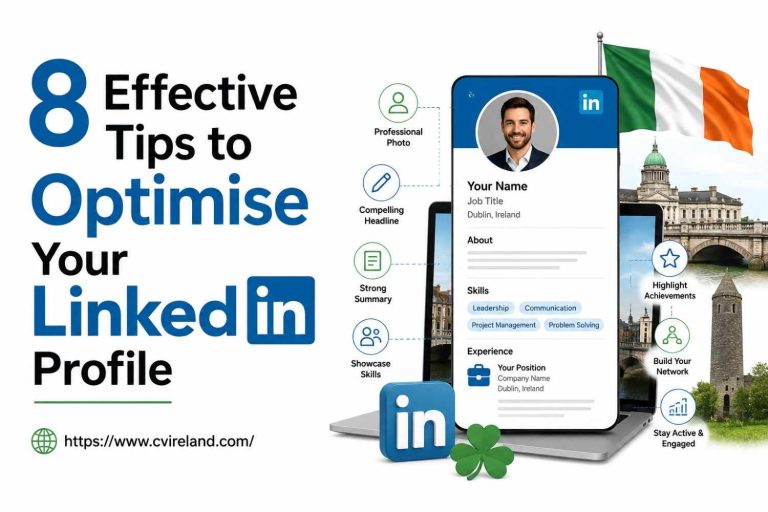
Add your LinkedIn profile. People in Ireland use LinkedIn frequently, so include it. If you don’t have a LinkedIn profile yet, set one up and complete it with all your details.
Mandatory information to highlight in CV
Education
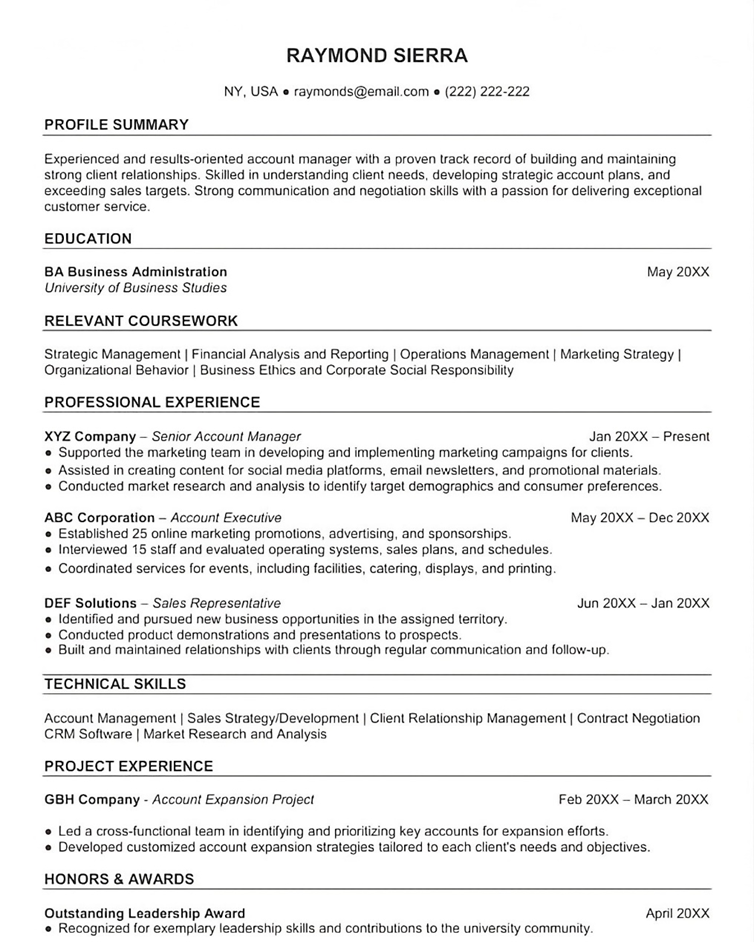
Kick things off with what matters most. Your top qualifications. Put your highest, most relevant degree right at the top. If you studied outside Ireland, mention what your degree is equivalent to here. Don’t make recruiters confuse or guess. Spell out your degree level clearly. This saves everyone time and shows you know what’s important.
Work Experience
Here’s where you get to show what you’ve really done. List your jobs starting from the most recent and work backward, but only include the roles that actually matter for the job you want. Forget the urge to cram in every job you’ve ever had, focus on the good stuff.
For each role, add your job title, then lay out your main responsibilities in quick, clear bullet points. Don’t just list tasks, show what you achieved and how you made a difference. Must write two to three measurable achievements in bullets for each job role. Think of it as telling a quick story: What You Did, How You Did It, And Why It Mattered. That beats a boring checklist any day.
Skills
Include technical skills, professional skills, and personal skills. Organize this section according to the specialities and expertise you’re pursuing, and yes, prove you’ve got what it takes to hit the ground running.
Languages
Don’t skip this, especially in Ireland, where workplaces are pretty international. List the languages you speak and how well you speak and write them: fluent, bilingual, native, whatever fits. One sharp sentence will do, but make it count.
References
Most Irish employers want references. If your old bosses are easy to reach, could you add their contact details? If they’re overseas and get a reference letter on company letterhead, attach it when you apply. It’s tidy, professional.
Cover Letter
So, after completing the CV, don’t forget to attach the cover letter. This is your opportunity to showcase your personality and let the recruiter see the genuine you. Keep it personal, aim it at the job you want, and keep a basic template. A good cover letter can be the thing that pushes your application over the line.
Important Note:
At the end, your CV doesn’t have to sound stiff or robotic. Imagine you’re introducing yourself to the recruiter. Show them what you can do, what you’ve done, and why you’re a great fit. Keep it real, keep it human, and you’ll stand out from the pile.

What’s an ATS-Friendly CV?
Ireland CV format also follows ATS format. Let us tell you, these days, your CV doesn’t always go straight to a human. Most companies use software called an Applicant Tracking System (ATS). Think of it like a robot, it scans resumes, looks for keywords, and decides which ones even make it to a real recruiter. If your CV isn’t ATS-friendly, you might never get seen, no matter how perfect you are for the job.
So, what makes a CV ATS-friendly? First, keep it simple. No fancy tables, graphics, or unprofessional fonts, plain text is your friend. Next, use the right keywords from the job description: job titles, skills, and tools. This is how the system knows you’re a match. Use standard headings such as Work Experience, Education, and Skills so the software can read them easily, and please skip images or charts that confuse the system. In the last Final, save it as a .docx or PDF file, not as a scanned image.
FAQS
How long should your CV be in Ireland?
Keep it short, two pages max. If you’re starting or are a fresher, you can stick to one page.
Do you need to include your personal information, such as your date of birth or marital status?
No, skip personal stuff like your age, relationship status, or religion. Employers only want to see your work experience, expertise, and skills.
What’s different about a CV in Ireland versus a resume elsewhere?
In Ireland, everyone calls it a CV, not a resume. Irish CVs usually run a bit longer, up to two pages, and go into more detail than typical one page resumes. A Full Upgrade Checklist


![What Does An Unprofessional CV Look Like? [with Examples]](https://www.cvireland.com/blog/wp-content/uploads/What-Does-An-Unprofessional-CV-Look-Like-1-1-768x512.jpg "What Does An Unprofessional CV Look Like 1 1")