Top Interview Questions That Reveal the Best Candidates
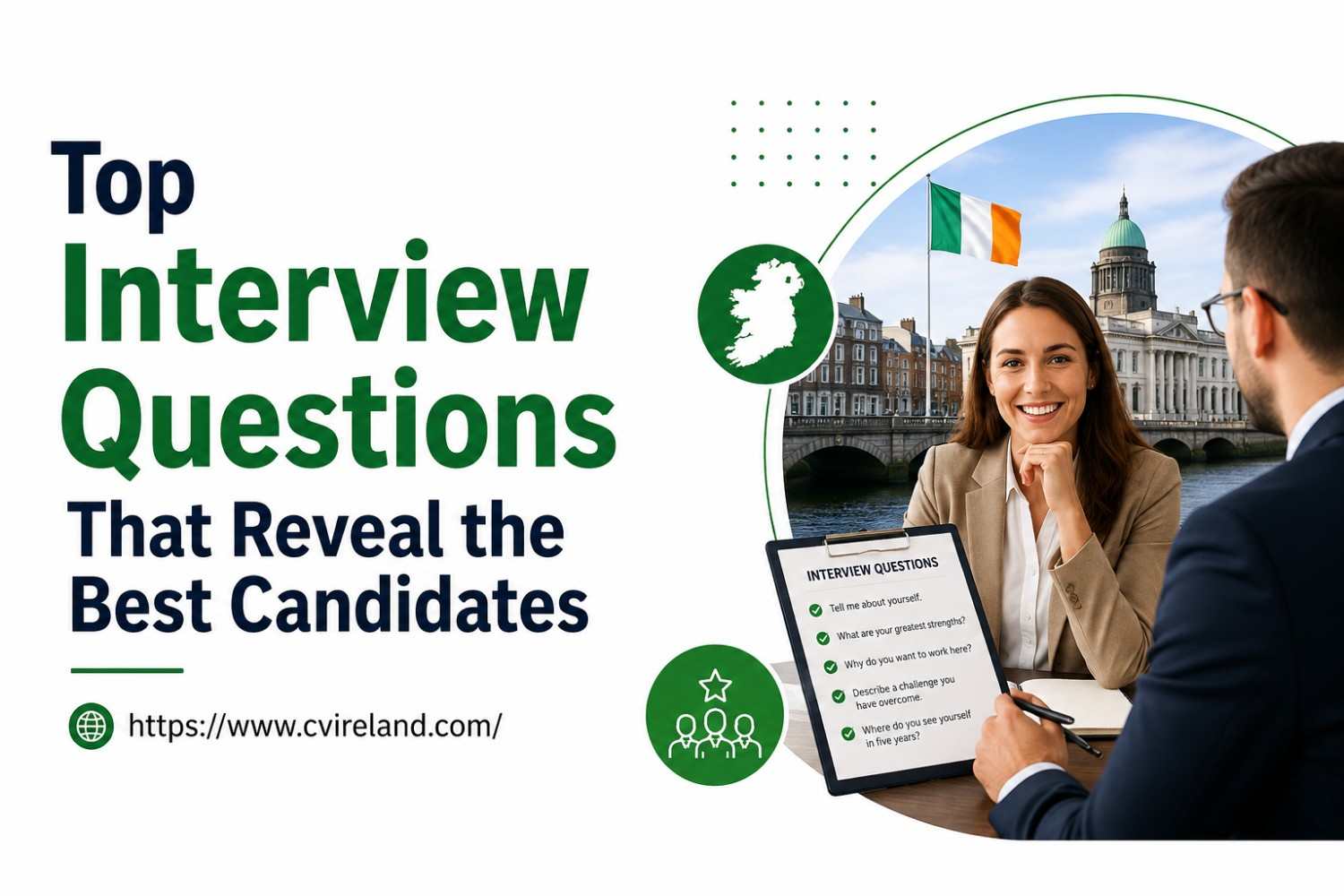
An effective interview question is not only about keeping up the conversation. It reflects the thought process of a candidate, their ability to work in a team, cope with pressure, and manage crises. Experience-related questions work especially effectively as they require a candidate to demonstrate more than just their polished statement.
There is no one answer to give you a clue about hiring decisions. Interviews become more efficient when all the candidates are asked the same basic questions and are evaluated according to the same criteria. It is also helpful to use a scorecard, as it will help keep your hiring decision job-related and not based on their confidence or first impression.
Your main goal is not to trick but to understand the capabilities of a candidate. Below you will see some questions which will help you to get the needed information without making the interview too dry and artificial.
Why Are Better Questions Helpful for Making Hiring Decisions?
Most candidates can define themselves as organised, hard-working, and sociable people. These statements become meaningful only if there is some example given. That is why asking a candidate what they did when several deadlines clashed, it helps you get a situation, a decision, an action, and a result.
Consistency does matter as well. Ireland’s public recruitment service explains that its interviews normally follow a structured format, with candidates questioned and assessed on the skills needed for the role. This helps ensure that all candidates are assessed equally and transparently.
The interaction will remain natural. You can reply and request additional information. However, you need to make sure that you are consistent regarding your major questions and marking system. Otherwise, one participant can get a tough interview while another one will enjoy a nice conversation about common topics.
How Should You Prepare Before the Interview?
Start by defining the position. Choose four to six skills that the new hire needs to perform on their job. They can be related to judgment, teamwork, communication, accuracy, problem-solving, and others. Write one question for each skill. An interview question will be useful only if it is related to job duties.
What Should You Decide Before Meeting Candidates?
It is important to define what a bad, adequate, and good answer will include. Do this before conducting the first interview rather than meeting an exceptional candidate. The interview guidance also recommends assessing candidates on the skills and capabilities that are relevant to the role.
Never consider a cleverly written CV as a guarantee of ability. The candidate who used the best resume writing agency in Ireland could be a very competent individual. But your questions must reveal the reasoning, actions, and outcome that lie beneath the words.
| Prepare | Decide |
| Skills | Which skills are relevant for the position? |
| Questions | Which question will assess each skill? |
| Evidence | What does an effective response include? |
| Follow-ups | Which additional information is needed? |
| Scoring | What distinguishes ineffective and effective evidence? |
| Timing | How much time will each section require? |
Which Questions Provide Insight into Candidate’s Actions?
“Can you handle stress?” allows for a straightforward positive answer. “Tell me how you dealt with an emergency when you had several tasks waiting on you.” Such an interview question forces people to recall their real-life situations and provide sufficient explanation.
Try asking:
- Describe a challenging business decision you once made.
- Tell me about a mistake you’ve made and its consequences.
- When did you have to learn something fast?
- Tell me about a disagreement you’ve had with a colleague.
- How have you managed conflicting deadlines?
- When have you improved in the process without being requested?
- Give me an example of a target that you failed to achieve.
- Describe a moment when you were unsure about your tasks.
Listen for details. The right answer should explain the situation, the candidate’s own part in it, actions taken by the candidate, and results obtained. Ask “What was your own part?” if someone continues using pronouns “we” or “our”.
What Could Various Questions Show You?
Questions about disagreement show how someone handles tension. You don’t need someone who agrees with everyone. You need someone who can listen, explain their view, and stay respectful.
An online profile can look very polished. The candidate may have worked with a LinkedIn profile specialist to present their career more clearly. Don’t judge them for getting help. Just make sure the answers in the interview support what the profile says.
| Ask about | What you may learn | What to listen for |
| A difficult choice | How they make decisions | The options and why they chose one |
| A mistake | How they take responsibility | Honesty, a fix, and a lesson |
| Learning something new | How quickly they learn | The steps they took |
| A disagreement | How they work with others | Listening and respect |
| Several deadlines | How they organise work | Clear priorities |
| Improving something | Whether they take action | A problem and a useful change |
How Can You Get More Detail from an Answer?
Some candidates practise their answers before the interview. There’s nothing wrong with that. The trouble is that a prepared answer can sometimes sound smooth without giving you many useful details.
A few short follow-up questions can help:
- What was your part?
- Why did you do that?
- What other choices did you have?
- What was the hardest part?
- How did the other person react?
- What happened in the end?
- What would you do differently now?
- How did you know it had worked?
Calmly ask these questions. You’re not trying to prove that the person is lying. You simply want to understand the story. If the answer is still unclear after two extra questions, make a note and move on.
How Should You Score the Answers?
It’s easy to forget details after interviewing several people. One person may be very friendly and confident, while another may be quiet. That can affect your judgment even when the quieter candidate gave better answers.
What Should You Put on the Scorecard?
Use a simple score from one to five. Write a short reason beside it. Don’t write things like “nice person” or “not our type.” Those comments don’t explain whether the candidate can actually do the job.
Each interviewer should give their score before the group starts talking. This stops one strong opinion from changing everyone else’s mind. The structured approach described by Publicjobs.ie is designed to ensure candidates are assessed equally and transparently against the capabilities required for the role.
| Score | What it means |
| 1 | No clear example |
| 2 | A weak example with very little detail |
| 3 | A suitable example and a reasonable response |
| 4 | A clear example with a good result |
| 5 | A strong example, good choices, and a useful lesson |
Which Questions Should You Leave Out?
Don’t ask personal questions that have nothing to do with the job. This includes questions about age, religion, pregnancy, disability, marriage, background, or plans to have children. None of these tells you how well the person will work.
If the job has fixed hours, ask whether the candidate can work those hours. Don’t ask who looks after their children. Ask whether they can carry out the main tasks, not whether they have a medical condition. The Workplace Relations Commission explains that Ireland’s Employment Equality Acts cover recruitment and protect applicants against discrimination on nine grounds.
Don’t assume that a graduate has little to offer because their work history is short. Someone who used a Graduate resume writer for hire may explain a university project clearly on their CV. Ask what they did, what went well, and what they learned from it.
A Few Questions Hiring Managers Often Ask
How many questions should you ask?
There is no fixed number. Six to eight main questions are usually enough for many roles. This gives candidates time to explain their answers without making the interview too long or rushed. Ask a short follow-up when you need more detail.
Should every candidate get the same questions?
Yes. Give every person the same main questions and use the same scoring guide. You can ask different follow-ups when something needs explaining. The main part of the interview should stay the same so everyone gets a fair chance.
Does a confident answer mean it’s a good answer?
No. Confidence can make an answer sound better than it is. Look for a real example, a clear action, and a result. A quiet candidate who gives useful details may be a better choice than someone who speaks well but says very little.
When should you score an answer?
Write short notes during the interview and score each answer as soon as you can. Focus on what the person actually said. Finish your own scores before speaking to the other interviewers, while the details are still fresh in your mind.
The Bottom Line
The bottom line? You don’t need clever tricks or strange questions. Ask candidates about real things they’ve done. If an answer is unclear, ask one or two short follow-ups. Then score it against what the job needs.
The best candidate may not give the smoothest answer. Look for honesty, sensible choices, responsibility, and a willingness to learn. Write down the details, compare everyone fairly, and make your decision based on what each person showed you.